A panel discussion of authors, graphic novellists and poets led by Gerry Hassan and Christopher Murray, 'professor of comics', on the important role of comics in allowing people in Scotland to dream big and let their imaginations go wild. Covers everything from The Bash Street Kids to Judge Dredd, as well as looking at the more gritty style of contemporary Scottish graphic novels.
15 Oct, 1.30pm, free
CCA, Glasgow
http://mhfestival.com/events.php?display=details&event_id=248
Showing posts with label AHM State of Play Symposium 1 - October 2010 - Glasgow. Show all posts
Showing posts with label AHM State of Play Symposium 1 - October 2010 - Glasgow. Show all posts
10 Oct 2011
18 Jan 2011
5 Dec 2010
Neil Mulholland Presentation

Neil Mulholland delivered a talk which illuminated the paradoxes inherent in contemporary Scottish culture and politics, drawing on Michael Gardiner’s arguments in, From Trocchi to Trainspotting: Scottish Cultural Theory since 1960. Referring to the anxiety which has arisen in the wake of devolution Mulholland compared Scotland with Venice...fiercely independent... punching above its weight, but slowly sinking. He reminded us that there was a British culture and a Scottish culture, that there was currently no English parliament, and that the “big society” was only applicable to England. The Tate Gallery’s brand, for example, is an expression of British statecraft which barely registers in Scotland. Acknowledging the influence of Hedley Bull’s, The Anarchical Society, Mullholland noted that within the world order there are multiple loyalties and when applied to Scotland this reveals what he describes as ‘ disputed national imaginaries’.
Mulholland went on to discuss ideas of cultural ecology - how long will our share of the world’s wealth be maintained ? - citing Eric Raymond’s, The Cathedral and the Bazaar, before returning to the local, where artists’ voices and activities can be and should be of real importance. The example of the New 57 Gallery’s constitution, which was in turn adopted by Transmission and the Collective Gallery amongst others, exemplifies a set of values developed locally, but capable of allowing national and international dialogues and exchanges and offers a ready-made course of action for artists.
Mulholland went on to discuss ideas of cultural ecology - how long will our share of the world’s wealth be maintained ? - citing Eric Raymond’s, The Cathedral and the Bazaar, before returning to the local, where artists’ voices and activities can be and should be of real importance. The example of the New 57 Gallery’s constitution, which was in turn adopted by Transmission and the Collective Gallery amongst others, exemplifies a set of values developed locally, but capable of allowing national and international dialogues and exchanges and offers a ready-made course of action for artists.
22 Nov 2010
AHM are the featured group on Central Station
AHM are the featured group on Central Station!
AHM have formed a group on Central Station called AHM Symposia, and documentation of the initial AHM State of Play Symposium is gradually being uploaded.
You will already find video footage of Philip Schlesinger's presentation, lots of photos, and a report on the event by AHM.
One by one, the individual manifestos are being uploaded to Central Station and the AHM blog, starting with Anthony Schrag's one minute manifesto today.
AHM are really keen to hear from people and continue the discussion started at the symposium, and these individual manifestos prove an ideal opportunity to do so.
Please join Central Station, become a member of the AHM Symposia group and make any thoughts, questions, comments about the symposium material.
The Central Station link is http://www.thisiscentralstation.com
Looking forward to hearing from you.
Best wishes
AHM
AHM have formed a group on Central Station called AHM Symposia, and documentation of the initial AHM State of Play Symposium is gradually being uploaded.
You will already find video footage of Philip Schlesinger's presentation, lots of photos, and a report on the event by AHM.
One by one, the individual manifestos are being uploaded to Central Station and the AHM blog, starting with Anthony Schrag's one minute manifesto today.
AHM are really keen to hear from people and continue the discussion started at the symposium, and these individual manifestos prove an ideal opportunity to do so.
Please join Central Station, become a member of the AHM Symposia group and make any thoughts, questions, comments about the symposium material.
The Central Station link is http://www.thisiscentralstation.com
Looking forward to hearing from you.
Best wishes
AHM
21 Nov 2010
AHM Symposium Announcement
Newsletter
In this issue
Research Residency Symposium Announcement
Speakers
Further Information
Research Residency Symposium Announcement 
Saturday 09 October 10am-5pm 2010
(Registration & refreshments 9.15am)
Gilmorehill Centre University of Glasgow
9 University Avenue Glasgow G12 8QQ
Tickets £10 Concessions £5
To book a place please contact Glasgow Sculpture Studios on 0141 204 1740 or via info@glasgowsculpturestudios.org
Ainsley, Harding and Moffat, aka AHM are in the second year of their Glasgow Sculpture Studios (GSS) Research Residency.
In this issue
Research Residency Symposium Announcement
Speakers
Further Information
Research Residency Symposium Announcement
Saturday 09 October 10am-5pm 2010
(Registration & refreshments 9.15am)
Gilmorehill Centre University of Glasgow
9 University Avenue Glasgow G12 8QQ
Tickets £10 Concessions £5
To book a place please contact Glasgow Sculpture Studios on 0141 204 1740 or via info@glasgowsculpturestudios.org
Ainsley, Harding and Moffat, aka AHM are in the second year of their Glasgow Sculpture Studios (GSS) Research Residency.


19 Nov 2010
AHM Symposium Report
After a great deal of reflection, AHM have produced a report on their first State of Play symposia that took place on Saturday 9th October at Gilmorehill, Glasgow.
It reads:
AHM were determined that the artist’s voice be heard and the Symposium began with a sequence of 27 one-minute manifestos - with the artists entering the darkened auditorium one after the other, lit only by a single spot - a dramatic and thought-provoking event in itself. The views expressed were wide-ranging in content - Jac Mantle argued that the proliferation of social media and digital content is displacing the national mainstream media as the main source of arts criticism for the general public and that artists should make more use of these new digital platforms. Chris Freemantle presented a manifesto for Art and Ecology quoting John Latham “ the task of the artist is to look from a very great height and over a long time span “. And there was some plain speaking from Jimmie Durham “ we live now in a world that is on the edge of destruction: let us then not act stupid. Let us resist. We must make art that is useful and moral, in the same way that we demand that writers write books that are useful and moral. “
David Harding, chairing the Symposium, began by setting out the main aims of AHM - to raise the profile of artists in the public domain whereby they can make a more significant contribution to the future life of Scotland - and to directly influence institutions and politicians of the vital importance of the arts to our society.
Philip Schlesinger’s main theme, given that cultural policy is a devolved matter, centered upon a critical examination of the political (New Labour) origins of Creative Scotland. The core of the idea, developed by “think tanks” in London and surprisingly adopted by the SNP government when it assumed power in 1997, is a classic neo-liberal model, deeply influenced by the ideology of the creative economy and based on vacuous assumptions that the UK would become the world’s creative hub in the new digital age of the 21st century. Schlesinger argued that although Creative Scotland is officially presented as democratic, in reality decisions will be made by a small inclusive/exclusive? group.
He explained how Scotland is deeply effected by UK politics with expenditure determined in London and as a result devolution itself will be challenged in the coming age of austerity. This means how Creative Scotland performs will be of major significance. Will the new body be successful - will it convince the public it works? As yet there are no clear set of objectives - only a vacuum of silence - although it appears that a business plan will be finalised in December. Schlesinger noted that The Symposium offered the first real focus for debate since the establishment of Creative Scotland in July, 2010.
Schlesinger pondered how artists might make an effective intervention at the heart of cultural policy. He pointed out that to achieve credibility has high costs in terms of understanding the political processes involved...in gaining knowledge of how things work, what questions to ask, how to access ministers...all of this involves an engagement with legislation and needs dedication, resources and people who are prepared to do it.
The discussion session was mainly about how artists could achieve a “voice” with Schlesinger suggesting that effective lobbying should reach out beyond obvious self-interest and that a more sophisticated argument, involving others, needs to be thought through. Susan Galloway, who recently completed a study of the Scottish Arts Council and its policies from 1968 onwards, said there is evidence to show that artist’s groups (such as the Federation of Scottish Artists in the mid 1970's) intervened successfully in the democratisation of SAC decision making. She asked “ do we have to accept the inevitable ?” and suggested that forming new kinds of political alliances could be a way forward. Others thought that the Scottish Artists Union already provided a good model and there was no need to form a new organisation.
Christine Borland talked about her experiences as an artist - a journey which began at art school and proceeded via artist-run spaces, private galleries, art fairs, to being on the dole, then teaching - experiences she felt she shared with many artists. As a student in Glasgow and then in Belfast in the 1980’s there was a lot to “kick against” and the development of her position as an artist took place in opposition to both the policies of the Thatcher government and to the extravagances of Neo-Expressionist painting.
Her period as a Transmission Committee member was also of great significance...not least the way the committee had to deal with the bureaucratic demands of the Scottish Arts Council. She described the meetings with the SAC as “ a confrontation ...they had no understanding of what artists needed “. She explained that the ambitions of Transmission - including a fierce commitment to Glasgow and a determination to bring artists to the city proved successful …. and that by working together and supporting each other artists could indeed, really change things.
Speaking of her own work, she described her collaboration with the Anatomy department at Glasgow University in the realisation of the exhibition From Life at Tramway in 1994, before talking of her relationship with the Lisson Gallery in London and her nomination for the Turner Prize - “ perhaps a contradiction in terms of my earlier beliefs - of going out there, doing it in the streets”. She concluded by acknowledging that as one gets older, there are different challenges, new questions to be asked and that it becomes less easy to find a forum for her work.
The discussion session was mainly concerned with the possibilities of making art in one’s home town (Glasgow) picking up on Christine’s comments about Transmission and how it was important to stay where we were and make that into a place where others had to visit, etc.
Neil Mulholland delivered a talk which illuminated the paradoxes inherent in contemporary Scottish culture and politics, drawing on Michael Gardiner’s arguments in, From Trocchi to Trainspotting: Scottish Cultural Theory since
1960. Referring to the anxiety which has arisen in the wake of devolution Mulholland compared Scotland with Venice...fiercely independent...punching above its weight, but slowly sinking. He reminded us that there was a British culture and a Scottish culture, that there was currently no English parliament, and that the “big society” was only applicable to England. The Tate Gallery’s brand, for example, is an expression of British statecraft which barely registers in Scotland. Acknowledging the influence of Hedley Bull’s, The Anarchical Society, Mullholland noted that within the world order there are multiple loyalties and when applied to Scotland this reveals what he describes as ‘ disputed national imaginaries’.
Mulholland went on to discuss ideas of cultural ecology - how long will our share of the world’s wealth be maintained ? - citing Eric Raymond’s, The Cathedral and the Bazaar, before returning to the local, where artists’ voices and activities can be and should be of real importance. The example of the New 57 Gallery’s constitution, which was in turn adopted by Transmission and the Collective Gallery amongst others, exemplifies a set of values developed locally, but capable of allowing national and international dialogues and exchanges and offers a ready-made course of action for artists.
Sam Ainsley drew together a number of writers and commentators on visual art and culture whose positions she supported and felt had been, in many cases, overlooked. These ranged from Gramsci to Tom Lawson, Ross Sinclair, Russell Ferguson and Sarah Lowndes, whose book “Social Sculpture” (charting the developments in the visual arts in Glasgow over the last thirty years) has recently been re-published by Luath Press.
Her position on “art degrees becoming the preserve of the wealthy” has been stated many times - working class (or to use the current lingo “ students from disadvantaged backgrounds”) would find it extremely hard to enter any Art School now. There are so few bursaries to support these potential students - this is a major problem that Scotland must resolve.
The Scottish Government and Creative Scotland need to listen to artists rather than bureaucrats; it was deeply worrying to hear their representatives talk of the “health benefits of the arts”, that “ we need to set targets, social and economic, not just cultural”, and promote “ Scottish culture as part of an import/export model, as a ‘ calling card’ to other countries “.
Who has put Scotland on the map internationally over the past twenty years ? Scotland’s artists, writers, dancers, theatre people, that’s who: most of our politicians are unaware of this and have little sense of the impact that the visual arts especially, have made abroad. We can provide the evidence...and would dearly love to enter into dialogue with any interested politicians.
Sandy Moffat pointed out that within the mainstream of cultural/political discourse, art and artists are rarely mentioned. Who is speaking for the visual arts and what are they talking about ? Unlike our writers who seem
able to directly address the Scottish people, the interface of contemporary art with the public realm has been taken over by celebrity artists whose apologists (including institutions such as the National Galleries and Art Schools) speak in jargon and are part of an elite art world that seems to answer only to itself - an art world that is perfectly happy to stand apart from society. This has led to confusion about what art and artists actually stand for.
Commenting on the lack of meaningful criticism, Moffat cited the example of George Davie, who in his great book, The Democratic Intellect, showed why critical thought, linked to the history of ideas is essential to the development of art and culture. Davie also knew that culture is not some separate thing ‘out there’ disjointed from the experience of ordinary people.
All of this poses a big challenge to artists. Do we want to take part in the political and cultural discourse; do we want to democratise intellectual ideas; or do we want to remain in an art world that speaks largely to itself ?
The final discussion session was somewhat confusing (as is often the case) with various interventions from audience members more concerned with their private obsessions than with the content/ideas which the Symposium’s main speakers had sought to illuminate.
17 Nov 2010
Philip Schlesinger Presentation at AHM State of Play Symposium
The presentati
Philip discusses the broad context of policy-mak
His presentati
14 Nov 2010
Join the AHM Symposia group on Central Station
AHM Symposia group is on Central Station - please join!
One month ago, the first of three symposia organised by AHM (Ainsley Harding Moffat) took place at the Gilmorehill Centre, University of Glasgow. The aim of the event was to examine where Scotland’s art and culture stands today and to re-engage the radical imagination.The symposium sold out three days before the event and 186 people turned up to spend a Saturday sharing their views on the State of Play in the arts today.
This group has been established to continue the discussions that began with the initial symposium.

AHM realise that there were many people that would have liked to have attended, but who were unable to. Through this group it will be possible for such people to access symposium material. Over time, there will be plenty of footage (video, photos, text and audio) from the symposium to help stimulate more debate and response.
There will also be information about the forthcoming symposia.
Please get in touch and lets continue the discussion!
This group has been established to continue the discussions that began with the initial symposium.
AHM realise that there were many people that would have liked to have attended, but who were unable to. Through this group it will be possible for such people to access symposium material. Over time, there will be plenty of footage (video, photos, text and audio) from the symposium to help stimulate more debate and response.
There will also be information about the forthcoming symposia.
Please get in touch and lets continue the discussion!
2 Nov 2010
Centre for Cultural Policy website
"Philip Schlesinger gave the opening keynote at the conference ‘State of Play: Art and Culture in Scotland Today’, held at the University of Glasgow’s Gilmorehill Centre. With 190 attendees from across Scotland’s arts world, the conference, organized by the ahm consultancy, testified to the great appetite for debate on the future of funding. Philip’s lecture set out the UK and Scottish policy context for culture and reflected on the issues confronting Creative Scotland. From the floor, Susan Galloway gave an invited comment based on her research into the Scottish Arts Council."
To read more about Philip's other research, please visit the Centre for Cultural Policy website:
http://www.gla.ac.uk/centres/ccpr/newsandevents/
To read more about Philip's other research, please visit the Centre for Cultural Policy website:
http://www.gla.ac.uk/centres/ccpr/newsandevents/
17 Oct 2010
Photos of Speakers Presentations

Neil Mulholland

Christine Borland
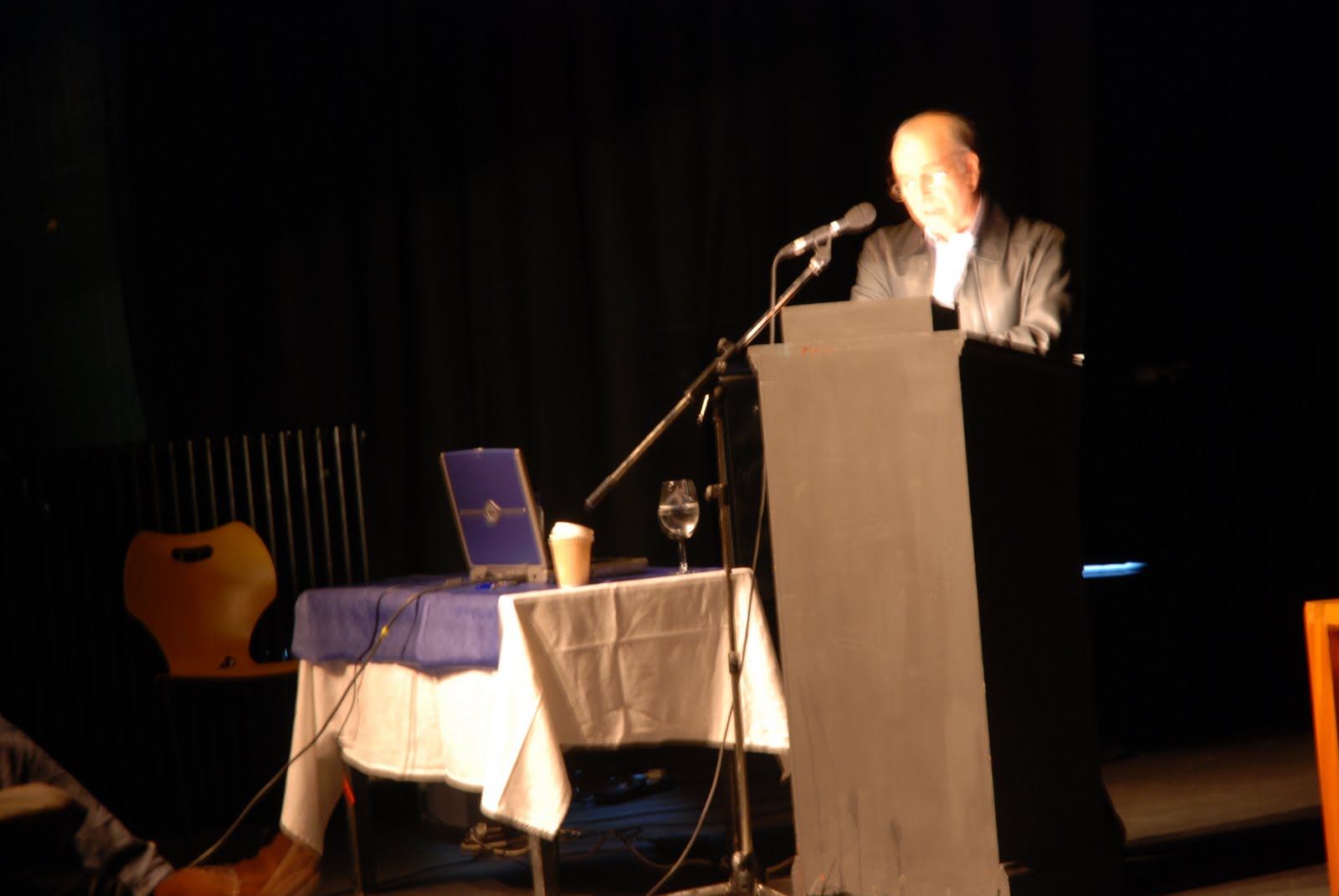
Philip Schlesinger
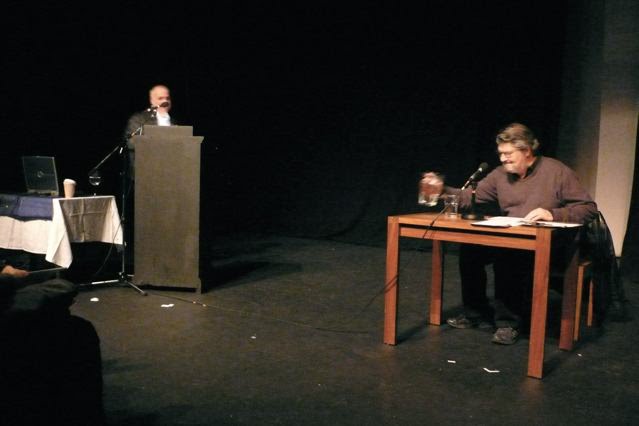
Philip Schlesinger and David Harding

David Harding
16 Oct 2010
photos from the manifesto performance at the AHM Symposium

Jac Mantle

Escutcheon Department of Athletics

Roxana Meechan

Dalziel and Scullion

Alice Bradshaw

Nicola Atkinson
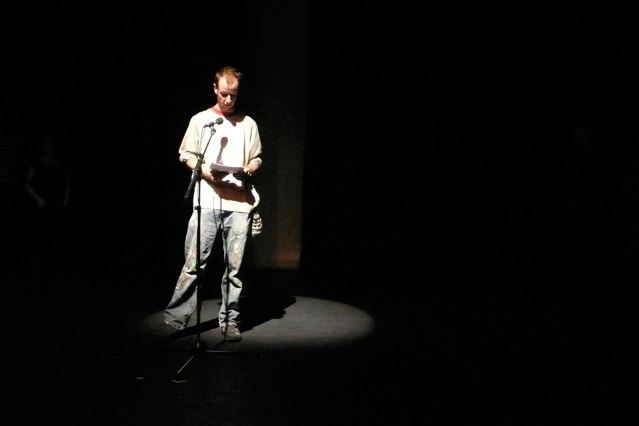
Alistair Quietsch

Sue Biazotti

John Pride

Minty Donald

Shelly Nadashi

Peter McCaughey (On behalf of Michelle Hannah, Jonathan Monk, Emilia Muller-Ginorio)

Oliver Metzger

Shauna McMullan

Sam Ainsley (On behalf of Alex Gross, Anthony Shrag)
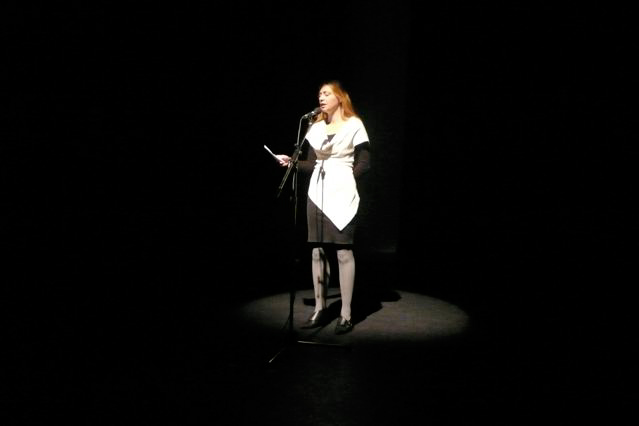
Ruth Barker

DMM McEwan (Black Sun Drum Corps)

David Harding (on behalf of Jimmie Durham, Ilana Halperin, and AHM)

Chris Freemantle

Janie Nicoll

Justin Carter

Ellie Harrison
14 Oct 2010
Some twitter feedback from delegates
Here are a few of the tweets following the Really enjoyed the #AHM symposium.
"Really enjoyed the AHM symposium: fab insight into Scottish art & culture today, well done & thanks for involving me, keen on pt2 in Edinburgh" Alice Bradshaw
"AHM State of Play symposium y'day - stimulating and thought provoking - over 180 people committed to the Visual Arts together on a Saturday." VAGA Scotland
"State of Play symposium made me think why is Scotland's cultural policy in thrall to DCMS - we need our own cultural think tank here... AHM?" VAGA Scotland
"Fab, very interesting day @ AHM's State of Play symposium! (on the state of contemporary art in Scotland) " Jac Mantle
"Really enjoyed the AHM symposium: fab insight into Scottish art & culture today, well done & thanks for involving me, keen on pt2 in Edinburgh" Alice Bradshaw
"AHM State of Play symposium y'day - stimulating and thought provoking - over 180 people committed to the Visual Arts together on a Saturday." VAGA Scotland
"State of Play symposium made me think why is Scotland's cultural policy in thrall to DCMS - we need our own cultural think tank here... AHM?" VAGA Scotland
"Fab, very interesting day @ AHM's State of Play symposium! (on the state of contemporary art in Scotland) " Jac Mantle
AHM Symposium hash tag on Twitter - #AHMSymposium
Please note that we have created a Twitter Hash Tag for the AHM Symposium, namely #AHMSymposium.
Hopefully this will make it easier to find and share information related to the symposium.
Hopefully this will make it easier to find and share information related to the symposium.
Neil Mulholland's presentation at AHM symposium
We are currently in the process of editing the footage from the AHM Symposium, and hope to make this available online in the not too distant future.
For those of you who cannot wait, Neil Mulholland's slide presentation can be viewed by clicking the link below.
Enjoy!
For those of you who cannot wait, Neil Mulholland's slide presentation can be viewed by clicking the link below.
Enjoy!
Venice: The State of Scottish Art
View more presentations from Dr Neil Mulholland.
1 Oct 2010
AHM on 'Manifesto performance'
"We don’t often hear from artists themselves – usually we hear only from art critics, journalists and administrators. The manifesto performance will give the opportunity to 30 artists to express their views, in a public forum, delivering a wide range of thoughts and attitudes reacting to the present condition."
19 Sept 2010
Information for AHM symposium delegates
Map : http://maps.google.co.uk/maps?oe=utf-8&client=firefox-a&ie=UTF8&q=gilmorehill+glasgow&fb=1&gl=uk&hq=gilmorehill&hnear=Glasgow,+City+of+Glasgow&cid=0,0,4016962096637134185&ei=Wtl-TNe8MsqNjAfixZDzCg&ved=0CBwQnwIwAQ&ll=55.872951,-4.284239&spn=0.014253,0.035791&z=15&iwloc=A
Public Transport to Gilmorehill : Buses: 44 & 44A, Nearest Underground: Kelvinbridge
Nearby places for lunch :
The Left Bank, 33–35 Gibson Street, Glasgow, G12 8NU - Phone: 0141 339 5969 - Website: www.theleftbank.co.uk
Offshore, 3-5 Gibson Street, Glasgow, G12 8NU - Phone: 07714 900720
Tchai-Ovna House of Tea, 42 Otago Lane, Glasgow G12 8PB - Phone: 0141 357 4524 - Website: http://tchaiovna.com/
Stravaigin Café Bar, 28 Gibson Street, Glasgow, G12 8NX - Phone: 0141 334 2665 - Website: www.stravaigin.com
Tattie Mac's, 61 Otago Street, Glasgow, G12 8PQ - Phone: 0141 337 2282 - Website: www.tattiemacs.co.uk
Costa, 471-479 Great Western Road, Glasgow, G12 8HL - Phone: 0141 339 6073
ICafe, 11 Gibson Street, Glasgow, G12 8NU - Phone: 0141 339 3333
Sonny & Vito's Deli Cafe, 52 Park Road, Glasgow, G4 9JG - Phone: 0141 357 0640
* Please note that food can be eaten in the venue
Public Transport to Gilmorehill : Buses: 44 & 44A, Nearest Underground: Kelvinbridge
Nearby places for lunch :
The Left Bank, 33–35 Gibson Street, Glasgow, G12 8NU - Phone: 0141 339 5969 - Website: www.theleftbank.co.uk
Offshore, 3-5 Gibson Street, Glasgow, G12 8NU - Phone: 07714 900720
Tchai-Ovna House of Tea, 42 Otago Lane, Glasgow G12 8PB - Phone: 0141 357 4524 - Website: http://tchaiovna.com/
Stravaigin Café Bar, 28 Gibson Street, Glasgow, G12 8NX - Phone: 0141 334 2665 - Website: www.stravaigin.com
Tattie Mac's, 61 Otago Street, Glasgow, G12 8PQ - Phone: 0141 337 2282 - Website: www.tattiemacs.co.uk
Costa, 471-479 Great Western Road, Glasgow, G12 8HL - Phone: 0141 339 6073
ICafe, 11 Gibson Street, Glasgow, G12 8NU - Phone: 0141 339 3333
Sonny & Vito's Deli Cafe, 52 Park Road, Glasgow, G4 9JG - Phone: 0141 357 0640
* Please note that food can be eaten in the venue
17 Sept 2010
AHM seek volunteers
AHM are recruiting volunteers to assist with their forthcoming symposium at Gilmorehill, Glasgow on Saturday 9th October 2010. AHM are looking for people with an interest in art and culture. Good communication/people skills are desirable, as you will mix with members of the public. Tasks are likely to include front of house assistance, dealing with ticketing and registration, managing the catering and operating roving microphones during the symposium discussions. Volunteers should be available between 9am and 5:30pm on Saturday 9th October.
If interested please email ahmglasgow@gmail.com
If interested please email ahmglasgow@gmail.com
13 Sept 2010
Symposium Programme Announced
If you have not already purchased your tickets for the AHM symposium on Saturday 9th October, make sure you do now.
To book a place please contact Glasgow Sculpture Studios on 0141 204 1740 or via info@glasgowsculpturestudios.org
Here is the programme for the day:
09-15 – 10-00 Registration and Refreshments
10-00 – 10-45 Manifestos
10-45 – 11-00 Introduction by Chair
11-00 – 11-30 Keynote Lecture - Prof. Philip Schlesinger
11-30 – 12-00 Discussion
12-00 – 12-30 Keynote Lecture - Christine Borland
12-30 – 13-00 Discussion
13-00 - 14-30 Lunch
14-30 - 15-00 Keynote Lecture - Dr. Neil Mulholland
15-00 - 15-30 Discussion
15-30 - 16-00 Keynote Lecture - Sam Ainsley, Sandy Moffat
16-00 - 16-30 Discussion
16-30 - 16-45 Concluding remarks
To book a place please contact Glasgow Sculpture Studios on 0141 204 1740 or via info@glasgowsculpturestudios.org
Here is the programme for the day:
09-15 – 10-00 Registration and Refreshments
10-00 – 10-45 Manifestos
10-45 – 11-00 Introduction by Chair
11-00 – 11-30 Keynote Lecture - Prof. Philip Schlesinger
11-30 – 12-00 Discussion
12-00 – 12-30 Keynote Lecture - Christine Borland
12-30 – 13-00 Discussion
13-00 - 14-30 Lunch
14-30 - 15-00 Keynote Lecture - Dr. Neil Mulholland
15-00 - 15-30 Discussion
15-30 - 16-00 Keynote Lecture - Sam Ainsley, Sandy Moffat
16-00 - 16-30 Discussion
16-30 - 16-45 Concluding remarks
Subscribe to:
Posts (Atom)


 AHM are happy for resources on this website to be used for non-commercial purposes and unless otherwise noted, have released this content under a